Guizhou is promoted in China as a summer refuge, and the reputation is earned: the plateau keeps daytime temperatures comfortable when the rest of the country is hot. The same altitude, however, makes evenings cool and the weather changeable. Pack in layers rather than for a single climate, and build a little flexibility into the plan. This guide gives a practical packing list by season and explains how guides adjust an itinerary when rain or cloud arrives.
The one idea to take away is that Guizhou rewards layered, light packing. You will rarely need a heavy wardrobe, but you will often be glad of a rain shell and a warm mid-layer on the same day. Travellers who pack for a fixed climate either overheat at midday or shiver at a high viewpoint; travellers who pack in layers simply adjust.
Summer (June to August)
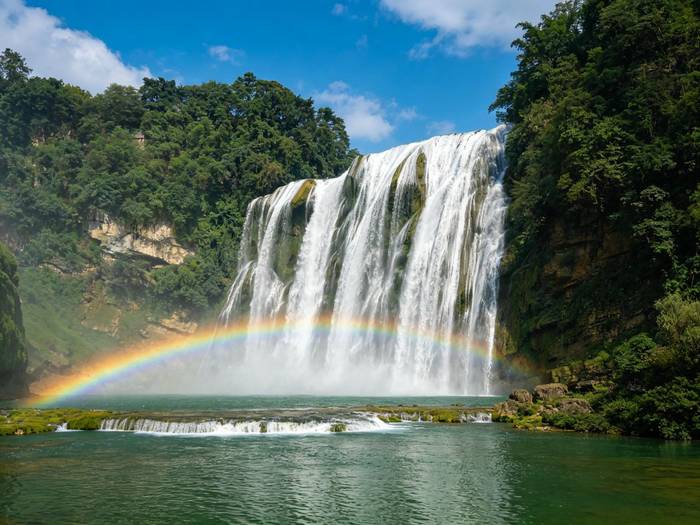
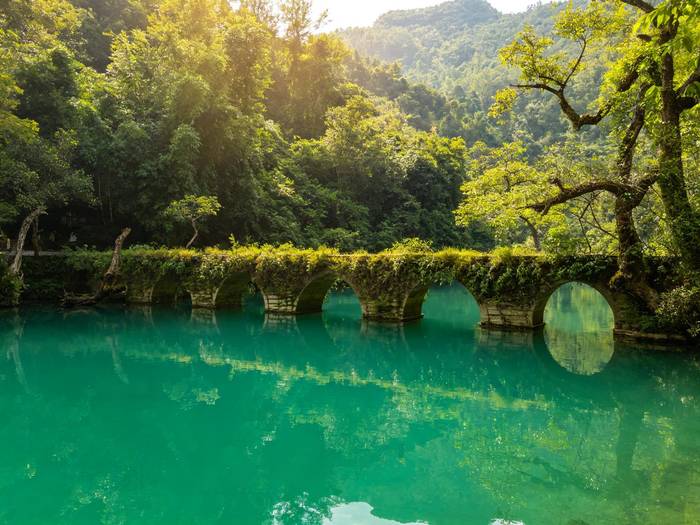
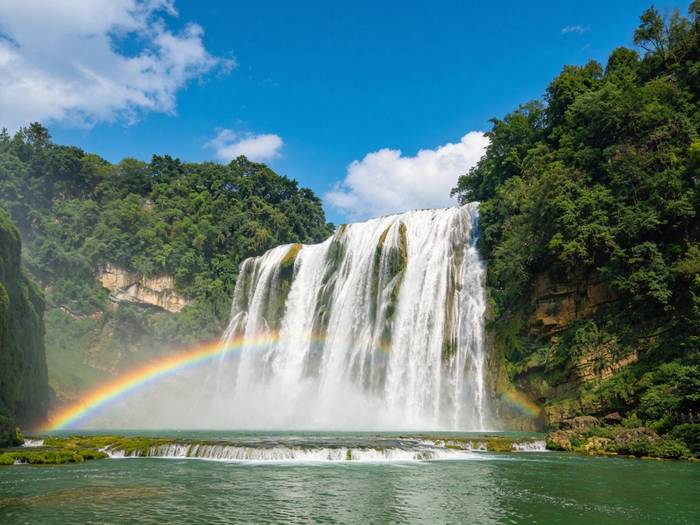
This is the peak travel season and the rainy season. Expect warm, humid days, afternoon showers and frequent cloud. A light waterproof shell, quick-dry trousers and shoes with grip are the core kit. The Water Forest at Xiaoqikong and the stone steps at Huangguoshu are slippery after rain, so footwear matters more than fashion here. Bring shoes that are already broken in; a new pair on a mountain walk is a common mistake.
Bring sunscreen anyway — cloud does not remove ultraviolet light at altitude. A dry bag for the camera is sensible insurance at the waterfall, and a compact umbrella is useful in the city though awkward on a trail. Rain rarely cancels a day: showers pass, and the falls look fuller afterwards. A local guide can reorder the zones around a heavy downpour, which is one of the practical benefits of a small-group or private tour. The rainy-season guide describes this approach in detail.
Spring (March to May) and autumn (September to November)
These are the most comfortable months for walking. Days are mild, mornings can be misty and evenings call for a light jacket or fleece. This is the best time for photography at Wanfenglin and the rice terraces, when the light is soft and the air is clear. A medium-weight layer plus a compact rain shell covers most days, and you will not need heavy winter clothing.
Spring and autumn are also the easiest seasons to pack for because the range is narrow. A morning that starts cool often becomes warm by midday and cools again at dusk, so the layered approach earns its keep. Bring a light scarf or a buff for misty mornings at a viewpoint, and a small day pack to shed layers as you walk.
Winter (December to February)
Guiyang is rarely bitter by Canadian standards, but the high sites are cold and wet. Mount Fanjing can be icy at the summit, and cloud may hide the view. Bring a warm insulated layer, a waterproof outer shell, gloves and a hat. Some travellers choose to skip the summit in winter and enjoy the forest and temples instead, which a guide can arrange without any sense of missing out.
Winter has a real advantage: far fewer visitors. The Miao villages are quieter, hotel rates are generally lower, and the pace is calmer. If mountain views are not your only priority, winter can be a rewarding and unhurried time to visit. Check the best-time guide for a season-by-season comparison.
What should everyone pack?
- Comfortable walking shoes with grip, already broken in
- A day pack with water, snacks and a light layer
- Any regular medication, plus a short supply in your carry-on
- Travel insurance documents and a copy of your passport
- A power adapter suitable for China and a power bank
- A small amount of cash for stalls and taxis
- A light rain shell and a dry bag for electronics
- Sunscreen and a hat, even in cloud
Lay out everything you plan to take, then remove a third. Laundry services are available in Guiyang and most hotels, so a week of clothing is not necessary. The items that genuinely earn their space are broken-in walking shoes, a light rain shell, a warm mid-layer and a dry bag. Everything else is negotiable.
Choose clothing in a small, coordinated palette so layers can be mixed without thought, and favour fabrics that dry overnight. A single pair of smart-casual clothes is enough for a good dinner; Guizhou's restaurants are relaxed, and comfort is valued over formality. If you are travelling for several weeks, plan to do a mid-trip laundry rather than doubling the suitcase. The weather and packing guide keeps the full seasonal list in one place, and a consultant can confirm the laundry options at your hotels.
How do dietary needs fit in?
Guizhou food is known for sour and spicy flavours. Travellers who prefer milder food should tell the consultant before booking; restaurants can usually prepare a less spicy version, and vegetarian meals can be arranged with notice. Allergies should be stated in writing on the booking form so the guide and the kitchen are briefed in advance. The food guide explains the dishes and how to order a meal you will enjoy.
Canadian ordinary passport holders may enter China visa-free for stays of up to 30 days, subject to the latest official announcement; verify with the official source and check the latest official announcement before travel. Prices in CAD are indicative and confirmed in your written quote.
A packing method that works
Keep the first day's kit in your carry-on: a change of socks, a light layer, any medication and a compact umbrella. If a checked bag is delayed, you can still start the tour comfortably. This matters more on a long-haul itinerary from Canada than travellers expect, because the first night sets the tone for everything after it.
Use packing cubes or simple bags to separate clean from worn layers, and keep the rain shell at the top of the day pack rather than at the bottom of a suitcase. Weather in Guizhou changes within a day, so the layer you need at 4 pm should be reachable without unpacking. A small tote for wet shoes or a damp shell keeps the rest of the bag dry on the transfer back to the hotel.
Check the forecast for your actual travel dates a few days before departure and adjust the layers. Guizhou's seasons are predictable in broad terms but variable week to week. A guide can also advise on the morning of a mountain day — a practical reason to keep the consultant's number saved. The before-you-go hub gathers the weather check into the wider packing checklist.
How guides adjust for weather
A locally based operator treats the daily order as flexible. If heavy rain falls on a mountain day, the summit can be swapped with a river town or a cave visit, and the climb attempted on a clearer morning. If a waterfall path is slick, the lower viewpoints come first and the closer approach waits. This is easier in a small group or private itinerary than on a fixed large-coach schedule, and it is a good reason to choose an operator that actually lives in the region.
Ask your consultant before departure what the alternate plan is. A clear answer indicates a team that has run tours in every season; a vague answer suggests the itinerary was written for different weather. In Guizhou, where three months of the year are wet, that distinction matters.
A month-by-month clothing guide
For travellers who like a quick reference, this is the practical shape of the year. It is a starting point, not a substitute for checking the forecast for your exact dates.
- January–February: warm insulated layer, waterproof shell, gloves and hat. High sites can be icy; expect fewer visitors.
- March–May: medium layer plus a compact rain shell; a scarf for misty mornings. The most comfortable walking months.
- June–August: light quick-dry layers, waterproof shell, grippy shoes, dry bag and sunscreen. Warm, humid with afternoon showers.
- September–November: medium layer plus a rain shell; excellent light for photography. Mornings and evenings are cool.
- December: warm layers for the high sites, lighter clothes in the city. Quiet season with lower rates.
The constant across every month is a pair of broken-in walking shoes and a light rain shell. Those two items do more work than anything else in the suitcase, because Guizhou's weather changes faster than a wardrobe can.
Packing for a multi-generational group
When parents or older relatives travel, the packing calculus shifts towards comfort and simplicity. Choose shoes with firm grip and cushioning, since stone steps and wet paths are the main challenge. A folding walking pole can be useful for anyone with knee concerns, and a small day pack worn by the guide can carry the layers that a traveller sheds during a walk.
Keep medication in the carry-on and in the day pack, never only in a suitcase, and ask the consultant to note any mobility limitation on the booking. The senior-friendly route guide explains which sections of a walk can be shortened. For a family travelling together, agree that anyone can call a pause without embarrassment; a good guide will find a bench and a cup of tea rather than pushing the group onwards.
Electricity and small comforts
China uses a different plug standard from Canada, so a universal adapter is a genuine necessity rather than a nice-to-have. Bring one adapter per person and a compact power bank for long transfer days, when a phone is simultaneously navigating, photographing and translating. A small reusable water bottle and a packet of tissues are also worth carrying; public facilities vary, and a guide can point you to a convenient place to refill.
None of these items is exotic. They are the small comforts that make a layered-packing approach work in practice, because they reduce the number of times you need to stop and improvise. Keep them in the day pack rather than the suitcase.
Weather and the big-name sites
Guizhou's weather behaves differently at each altitude, so the same week can feel like several climates. Guiyang sits on the plateau and stays mild, but the low valleys near Libo are warmer and more humid, while the summit of Mount Fanjing can be cold and windy even in July. Pack for the highest and wettest place you will visit, not for the city where you land. A guide can tell you each morning what the high site is doing and whether the usual layers are enough.
The Mount Fanjing guide explains the summit conditions, and the Xiaoqikong guide describes the wet paths around the Water Forest. Huangguoshu is at its most dramatic after rain, but the spray near the falls soaks clothing quickly, so a shell and a dry bag belong in the day pack even on a clear morning. Travellers who understand these differences pack once and settle in; travellers who assume one climate struggle to adjust.
Common questions
Is summer too rainy to go?
No. Showers are usually brief, and the landscape is at its greenest. Bring a shell, wear shoes with grip and keep a flexible attitude. Full waterfalls are a genuine summer highlight.
How cold is Mount Fanjing?
The summit can be around 10°C cooler than Guiyang, with wind. Layers are essential even in summer, and a guide can advise on the morning whether the climb is sensible.
Do I need hiking boots?
Not for the standard routes. Trail shoes or sturdy walking shoes with grip are enough, provided they are broken in. The main risk is a slippery stone path after rain, not rough terrain.
Plan for the season
Read the Mount Fanjing guide and Xiaoqikong guide, browse small-group tours, or design a private itinerary around your preferred month. A consultant can confirm the likely conditions for your exact dates before you pack. Prices in CAD are indicative and confirmed in your written quote, and Kanghui Travel has operated in Guizhou since 1997 under licence L-GZ-CJ00022.
How do I pack for both city and mountain in one trip?
Treat them as two small wardrobes within one bag. The city portion is ordinary comfortable clothing plus a light layer for air-conditioned restaurants. The mountain portion is the grippy shoes, the rain shell, the warm mid-layer and the dry bag. Keep the mountain items together at the top of the suitcase so a change of plan on the morning of a summit day does not mean unpacking everything. A small foldable tote for wet layers is worth the space it takes, and a dedicated consultant can tell you which days in your itinerary are the high, cool ones.