The best time to visit Guizhou for most travellers is April to May or September to October, when the weather is mild, the water is good and visitor numbers are manageable. June to August offers the coolest temperatures and the fullest waterfalls but brings the rainy season and holiday crowds. Winter is quiet and atmospheric, though high sites can be cold and cloudy. This guide compares the seasons, explains how festivals fit into the calendar and shows how to choose a month based on what you actually want to see.
There is no single wrong time to visit Guizhou — each season offers a different version of the province. The useful question is what you value most: big water and cool air, comfortable walking and photography, quiet villages, or a specific celebration. Answer that first, and the right window becomes clear. Prices, crowds and weather then confirm the choice rather than driving it.
Why summer is popular
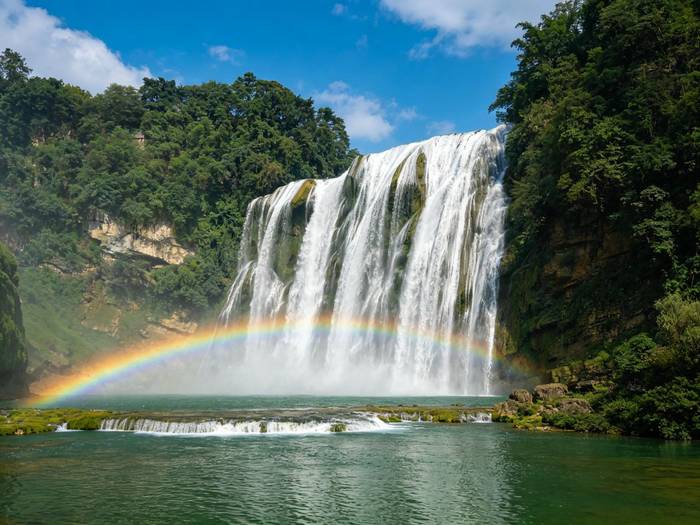
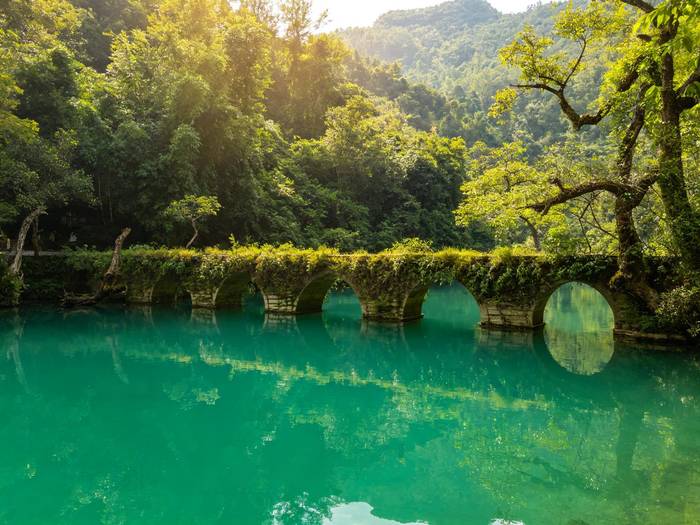
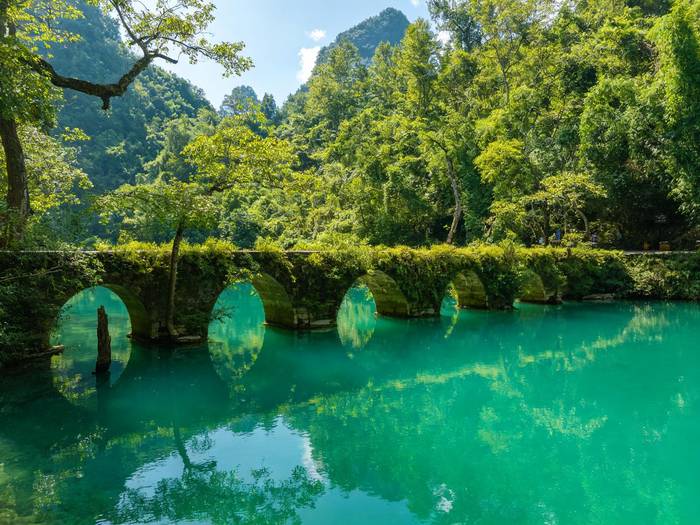
Guizhou sits on a plateau and is known across China as a summer escape from the heat of the lowlands. Huangguoshu Waterfall is at its most powerful, Xiaoqikong is deep green and the Miao villages are lively. For a traveller escaping a North American heatwave, the comfortable daytime temperatures are a genuine pleasure. The cost is rain: June, July and August are the wettest months, and afternoon showers are common.
Showers usually pass quickly and guides carry alternate plans, but a waterproof layer is not optional. Book accommodation and small-group places well ahead for July and August, which are the busiest weeks. The upside is that the landscape is at its most vivid and the waterfalls are spectacular; the rainy-season guide explains how a summer itinerary adapts to the weather.
Why spring and autumn suit many travellers
These months give the best balance. Morning mist lifts off the rice terraces, the light at Wanfenglin is softer, and the walking is comfortable without heavy rain gear. Photography is especially good in October, when the fields below the karst peaks turn gold. For many experienced travellers, this is simply the most agreeable time to be out on the roads.
Shoulder seasons also make the logistics easier: shorter queues at the big scenic areas and more flexibility with hotel categories. A small group can move at a gentler pace, and a private itinerary can linger at a viewpoint without the pressure of a peak-season crowd. Travellers who dislike crowds generally prefer this window, and the five-day loop guide shows how the main sites fit together comfortably within it.
What about winter?
December to February is the quiet season. Guiyang itself is mild by Canadian standards, but Mount Fanjing's summit can be icy and cloud may hide the view. On the other hand, the Miao villages are calm, and you can see daily life without the tour groups. Hotel rates are generally lower, and the unhurried atmosphere suits repeat visitors or travellers who value atmosphere over big views.
If mountain views are the priority, winter is a gamble: a cloudy summit can be disappointing. If atmosphere, quiet and value matter more, it is a good choice. A guide can check conditions each morning and suggest the lower temples and forest instead of the climb when the summit is closed.
Do festivals matter?
Miao and Dong communities mark the year with local celebrations, and dates vary by village and by the lunar calendar. Some travellers plan a trip around them, but festival dates should be confirmed close to departure with a local consultant rather than assumed from a general calendar. A private itinerary can be built around a specific celebration if the date is known in advance and the community is open to visitors.
What makes a festival worthwhile is the setting rather than the spectacle. A village celebration is a local event, and a good guide explains what you are seeing and how to behave respectfully. Ask your consultant which celebrations fall in your travel window and whether a visit is appropriate; an honest answer is more useful than a generic list.
How does timing affect price and crowds?
Peak-season departures cost more because hotels and vehicles are in higher demand. A written quote states the exact price for your dates. Kanghui Travel publishes a starting figure in CAD and confirms the final amount within 24 hours; no payment is required before approval. Canadian ordinary passport holders may enter China visa-free for stays of up to 30 days, subject to the latest official announcement; verify with the official source and check the latest official announcement before travel.
Crowds follow a predictable pattern. The first week of October is a major public holiday and the busiest period of the year at the main sites. July and August are busy but spread over a longer window. Shoulder months are calmer, and winter is quiet. Choosing a week outside the holiday peak often improves a trip more than any other single decision.
Match the season to your priorities
Big water and cool days — June to August, with a rain shell and a flexible plan.
Photography and comfortable walking — April to May or September to October.
Quiet villages and lower prices — December to February, with warm layers for the summits.
A specific festival — confirm the date with a local consultant, then build the itinerary around it.
Small groups in the eight-person range work well in shoulder season, when a guide can adjust the schedule without a large group to consult. Private customized tours give the same flexibility to couples and friends travelling in their thirties and forties. The choice of group size and the choice of month reinforce each other: a quiet season and a small group produce the most unhurried version of Guizhou.
Matching the season to your group
Families travelling with children often prefer July and August despite the rain, simply because it matches the school holiday. The trade-off is manageable with a flexible guide and a hotel with laundry. Multi-generational groups often do better in May or October, when the walking is comfortable and the sites are less crowded. The senior-friendly route guide explains how pacing changes with the season.
Travellers specifically interested in Miao and Dong culture should ask about festival dates rather than relying on a general calendar. Dates are set locally and can shift. A private itinerary can be built around a celebration once the date is confirmed by a local consultant. Whatever the month, build one free day into a trip longer than a week. Guizhou rewards a slow second visit to a village or a repeated viewpoint at a different hour. A rushed schedule leaves no room for the moments travellers actually remember.
A month-by-month snapshot
- January–February: quiet, cold at altitude, low rates; good for atmosphere, poor for summit views.
- March–April: mild, misty mornings, blossoms and comfortable walking; excellent value.
- May: warm, dry and green; one of the strongest all-round months.
- June–August: cool, wet, full waterfalls and peak crowds; book early and stay flexible.
- September: rain easing, clear light, comfortable temperatures; a favourite for photography.
- October: golden fields and excellent light, but avoid the first-week holiday peak.
- November–December: cool, quiet and clear; good for villages and lower rates.
No snapshot can guarantee a particular day, and that is the honest point: Guizhou's seasons are reliable in broad terms but variable week to week. Check the forecast close to departure and let a local guide make the final call on a mountain morning.
Use the snapshot to choose a window, then let a consultant refine it against the specific sites on your itinerary. A month that is ideal for the terraces may be less reliable for a high summit, and a week with fewer crowds can matter more than a marginal difference in temperature. The weather and packing guide translates the seasonal picture into a practical clothing list.
What each signature site is like by season
Different places in Guizhou reward different months, and knowing that helps you choose. The province is not a single climate: the plateau around Guiyang, the low valleys near Libo and the high summit of Mount Fanjing behave differently.
Huangguoshu Waterfall is spectacular in summer when the flow is highest, but the spray and the crowds are both at their peak. Spring and autumn offer a cleaner view with comfortable walking, and winter shows a quieter, thinner falls. A guide knows which platform gives the best angle for the conditions on the day.
Xiaoqikong and the Libo karst are at their greenest in summer, and the water is at its clearest after a run of dry days. Spring brings wildflowers and gentler light; autumn is calm and clear. Heavy rain can temporarily cloud the water, which is why a flexible order helps.
Xijiang Qianhu Miao Village is atmospheric in any season, but misty mornings and cool evenings suit autumn and winter especially well. The evening lights are a highlight year-round. A village overnight lets you see it before the day groups arrive.
Mount Fanjing is the most weather-dependent site. Autumn mornings offer the best chance of a sea of clouds, summer brings lush green but frequent cloud, and winter can close the summit with ice. A guide checks conditions before committing to the climb.
Wanfenglin and the terraces photograph best in spring and autumn, when the light is soft and the fields are green or gold. The Xiaoqikong guide and the Mount Fanjing guide describe each site's practical details.
Building a festival trip responsibly
A festival can be the highlight of a Guizhou journey, but it needs careful planning. Dates follow the lunar calendar and are confirmed locally close to the event, sometimes only weeks ahead. Villages vary in how openly they welcome visitors, and a celebration is a community occasion rather than a performance staged for tourists. A reputable operator asks whether a visit is appropriate and sets expectations for behaviour.
If a specific celebration matters to you, raise it at enquiry stage with a flexible window of a few days around the likely date. A private itinerary can then be shaped around it, while keeping an alternative plan in case the date shifts. Small-group departures follow a fixed schedule and cannot easily be rebuilt around a local event, so a private route is usually the better fit for festival-focused travel. Your consultant can explain which celebrations are accessible and which are best left to the community.
How far ahead to book by season
Booking lead time follows the crowd pattern. For July, August and the first week of October, secure accommodation and a small-group place several months ahead if you can, because the best hotels and the smaller departures fill first. Shoulder months need less notice but still benefit from an early decision on hotel category, especially if you want a particular property in a village.
Winter is the most flexible season, with shorter lead times and more room to shape a private itinerary near the date. International flights from Canada should always be compared early regardless of season, since direct capacity is limited and schedules change. The getting-to-Guizhou guide covers the routing options. A consultant can sequence the bookings so that the flight, the tour and the hotel confirmations line up without gaps.
A simple way to decide
If you are still unsure, answer three questions. First, do you want big waterfalls and cool air above all else? Choose June to August and accept the rain. Second, do you want comfortable walking, soft light and fewer people? Choose May, September or October outside the holiday week. Third, do you want quiet villages and the lowest rates? Choose winter and treat the high summits as optional. There is no wrong answer, only a better match between the month and your priorities.
A dedicated consultant can turn that choice into specific dates, confirm the likely crowd level and note any festival that falls nearby. Kanghui Travel has operated in Guizhou since 1997 under licence L-GZ-CJ00022, and a written quote states the exact price for your chosen dates.
Common questions
Is it too hot in summer?
Guiyang and the highlands are noticeably cooler than most Chinese cities, but the lowland transfers can be humid. Plan early starts for the longer driving days, and carry water. The weather and packing guide gives a seasonal checklist.
Can I see the sea of clouds at Mount Fanjing?
Autumn mornings are the most reliable, but cloud conditions are never guaranteed. A guide can check the forecast and shift the mountain day to a clearer morning. Treat a sea of clouds as a bonus rather than a promise.
Are the villages crowded in October?
Public holidays can be very busy. Avoid the first week of October if you want a quiet visit; the second half of the month is calmer and the light is still excellent.
Plan your season
Browse small-group tours or design a private itinerary around your preferred month. The rainy-season guide explains what to expect in summer, and a dedicated consultant can confirm the likely conditions and crowd levels for your exact dates. Whether you travel in the green of June or the gold of October, the most reliable way to enjoy Guizhou is to travel with a local team that can read the weather, time the sites and adjust the day around you.
Tell the consultant your preferred month, your group size and the one experience you most want, and they can shape the dates around it. Prices are shown in CAD as indicative figures and confirmed in a written quote within 24 hours, with no payment before approval. A well-chosen season, matched to a well-designed route, is the simplest way to get more from the same number of days. Kanghui Travel has operated in Guizhou since 1997 under licence L-GZ-CJ00022, with quotes delivered within 24 hours and no payment before approval.