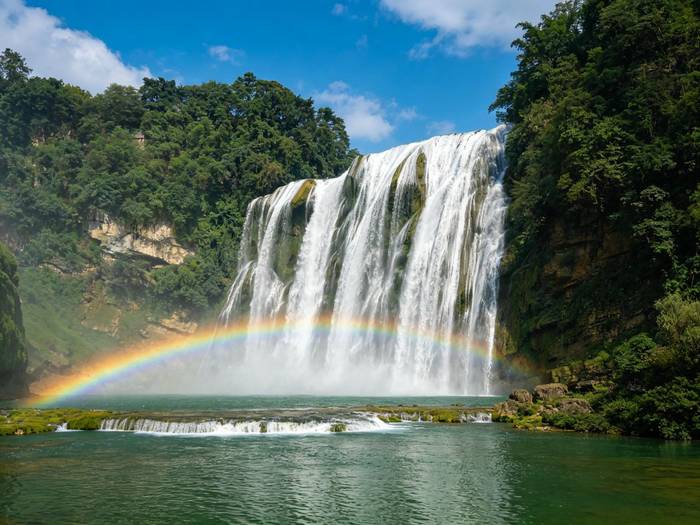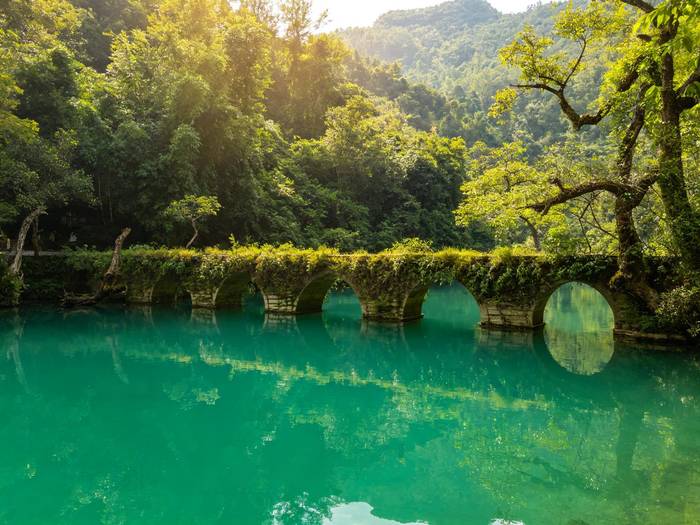
Guizhou's rainy season runs roughly from June through August, and the answer to "can you still go?" is yes. Most showers are short, the temperature is comfortable, and the province's waterfalls and karst rivers look their best. The adjustment is in preparation and pacing, not in cancelling the trip. This guide explains what actually changes, which sites reward a visit after rain, how guides reorder a wet day, and what to pack so that a shower is an inconvenience rather than a problem.
It helps to be honest about the trade-off. Summer rain is real: it falls most days, sometimes heavily, and it affects stone paths and mountain views. But the season also delivers the fullest waterfalls, the greenest landscape and the coolest temperatures in the country. Travellers who accept the rain and plan around it usually come home delighted; travellers who expect a dry, controlled climate are the ones who struggle. Set the expectation correctly and the season is a pleasure.
What actually changes?
Heavy rain makes stone paths slippery, especially at Huangguoshu's water curtain and the Water Forest at Xiaoqikong. It can also turn the water brown for a day or two after a major storm, reducing the famous green-blue colour at Libo. A guide checks conditions and may suggest visiting a site a day later if a major storm has just passed.
On the positive side, the falls are fuller, the air is clear after a shower and the vegetation is at its most vivid. Summer is also when Guizhou's reputation as a cool-weather refuge makes the most sense — daytime temperatures stay moderate compared with the rest of China. Afternoon showers are the common pattern, which leaves many mornings dry and usable. Early starts are therefore a practical strategy, not just a preference.
Which sites work best after rain?
Huangguoshu Waterfall benefits most from higher water flow, though the path behind the falls is the first thing a guide may skip if the spray is too heavy. The lower platforms still give an excellent view.
Zhijin Cave is largely unaffected. An underground visit is a smart addition to a summer itinerary because weather does not reach the formations, and the cave keeps a constant temperature. The Zhijin Cave guide explains what to expect.
Xijiang Qianhu Miao Village is atmospheric in mist. The evening lights seen through light rain are a genuine highlight, and the village lanes take on a different character.
Mount Fanjing is the most weather-dependent. High wind or heavy rain can close the summit, and a reputable guide will check before committing to the climb. The forest and lower temples remain worthwhile even when the top is out.
Zhenyuan Ancient Town works well in light rain. The riverside streets and covered bridges are pleasant in a shower, and it is a good swap for a mountain day. The Zhenyuan guide describes the town.
How do guides adjust the plan?
A good local operator treats the daily order as flexible. If the forecast puts rain on the mountain day, swap Mount Fanjing with Zhenyuan or a cave visit and climb on the clearer morning. If a waterfall path is too slick, visit the lower viewpoints first and return later. That flexibility is much easier in a small group or a private itinerary than on a fixed large-coach schedule, and it is a practical reason to choose a locally based operator over a booking assembled overseas.
The decision is made each morning from the forecast and the road conditions. A guide who has run summer tours knows which roads hold up after heavy rain and which viewpoints drain quickly. Ask your consultant before departure what the alternate plan is: a clear answer indicates experience, while a vague one suggests the itinerary was written for a different season. In Guizhou, that distinction matters for about three months of the year.
What should you pack?
A light waterproof shell, quick-dry trousers, shoes with grip, a dry bag for electronics and a small towel. A compact umbrella is useful in the cities but awkward on a trail. Keep a spare pair of socks in your day pack — wet feet are the fastest way to ruin a walking day, and a change of socks at lunch restores morale immediately.
Sunscreen still matters. Cloud cover at altitude does not remove ultraviolet exposure. A hat with a brim helps in both sun and rain, and a small cloth for wiping a camera lens earns its place. The weather and packing guide gives a full seasonal checklist, and the before-you-go hub groups it with the other preparations.
Is summer more expensive?
Peak-season pricing applies to hotels and some departures. Kanghui Travel quotes the exact price for your dates in CAD and confirms it in writing within 24 hours, with no payment before approval. Canadian ordinary passport holders may enter China visa-free for stays of up to 30 days, subject to the latest official announcement; verify with the official source and check the latest official announcement before travel.
The value of a summer trip is high despite the peak pricing: the landscape and the waterfalls are at their most dramatic. Booking early secures a better choice of hotels and smaller departures, and a flexible itinerary gets more out of each day than a fixed one. A written quote tells you exactly what the season costs before you commit.
A typical rainy-week day
To see how the flexibility works, imagine a morning with heavy rain forecast until noon. The guide starts the day later, allowing a relaxed breakfast, and visits Zhijin Cave or the provincial museum while the rain passes. Lunch is taken near the next stop. By early afternoon the sky clears, and the group heads to a viewpoint with the guide checking the path conditions before the walk. The evening is free for a hot meal and dry clothes.
The same week, a clear morning at Mount Fanjing is claimed as soon as it appears, even if it means an early start. The order of the itinerary is a tool, not a fixed promise. Travellers who understand this enjoy summer far more than those who expect each day to follow a printed schedule exactly.
Who enjoys summer most?
Families travelling with children often choose summer because it matches the school holiday, and the cool temperatures suit active kids. The rain is manageable with the right kit and a guide who can pivot. Multi-generational groups can also travel well in summer, provided the itinerary keeps transfers short and keeps an indoor option in reserve; the senior-friendly route guide covers pacing. Travellers in their thirties and forties who want dramatic scenery and don't mind a wet morning often find summer their favourite season.
Photographers, too, have reasons to welcome the rain: mist in the valleys, reflections on wet stone and dramatic cloud above the karst. A shower clears the air and softens the light, and the falls are at their most powerful. The key is a flexible guide who will place you at the right viewpoint at the right hour. Ask your consultant how a summer departure handles the morning starts and the indoor backups before you commit.
Why the rain is worth it
Guizhou's summer green is not a marketing idea — it is the direct result of the rain, and it is at its most intense in July and August. The karst hills take on a depth of colour that the dry months cannot match. Waterfalls that are a trickle in winter become a curtain of white water, and the rivers running through the villages are full and quick. Travellers who visit in July often say the landscape exceeded their expectations precisely because it is so alive.
The rain also keeps the temperature comfortable. While much of China swelters, Guizhou's plateau stays mild, and a passing shower is a relief rather than an inconvenience. This is why the province is promoted domestically as a summer refuge, and why families return year after year. Understand that the rain is the price of the green and the cool, and the trade begins to look reasonable.
There is a rhythm to a summer day that regular visitors learn to love: a clear, soft morning; cloud building by midday; a short, heavy afternoon shower; then a clearing evening with low light on the hills. Guides plan around that rhythm, placing the outdoor walk in the morning and an indoor or sheltered stop when the shower is expected. It is a predictable pattern, not constant downpour.
A wet-weather packing deep dive
The difference between enjoying and enduring a rainy day is usually footwear and layers. Wear shoes with a grippy sole that have already been broken in; wet stone is unforgiving to smooth soles and to brand-new shoes. A pair of quick-dry trousers beats denim, which stays heavy and cold when wet. A light waterproof shell that breathes is more useful than a heavy raincoat, because you will be walking, not standing.
Pack a dry bag for the camera and phone, and a small microfibre towel for lenses and hands. Keep a spare pair of socks and a light layer in the day pack, because a change of socks at lunch does as much for morale as any scenic stop. A compact umbrella is handy in the towns but awkward on a trail or a cableway, so bring one for the city days and rely on the shell on the mountain. The weather and packing guide lists the full kit by season.
For families, pack a small zip bag for each person's wet clothes and a plastic sleeve for the day's documents. Children in particular enjoy the rain if they are comfortable, and a dry change at the end of the day prevents a grumpy evening. A guide can point out sheltered spots for a snack when a shower arrives.
Indoor and sheltered alternatives in depth
A summer itinerary works best when it holds more than one indoor option. Zhijin Cave is the strongest: a vastlit underground formation with a constant temperature and a lit visitor route, unaffected by anything happening above ground. A jade or intangible-heritage museum can fill a shorter gap, though a guide should be honest about how much of a visit is a retail floor. The Zhijin Cave guide explains why it is the reliable rainy-day anchor.
Sheltered options matter too. The covered bridges and arcades of Zhenyuan Ancient Town let you walk in light rain, and the old streets of Qingyan have plenty of eaves to duck under. A tea house in a Miao village is a pleasant place to wait out a shower, and a guide can turn the wait into a conversation about the village. These are not consolation prizes; on a wet day they are often the most atmospheric part of the trip.
The best operators do not simply cancel a walk. They reorder it. If the mountain is closed in the morning, visit the river town and climb in the afternoon when the cloud lifts. If the waterfall path is slick, view it from the lower platforms and return after lunch. Ask your consultant before departure what the alternate plan is. A clear answer indicates a team that has run tours in summer before; a vague answer suggests the itinerary was written for a different season. In Guizhou, that distinction matters for about three months of the year.
Common questions
Will my flight be delayed?
Afternoon thunderstorms can affect domestic flights in summer. Allow buffer time before an international connection and keep the 24-hour consultant number handy. A buffer on arrival day absorbs most disruptions.
Is hiking safe in the rain?
On the standard routes with a guide, yes. The summit ladder at Mount Fanjing is the exception — a guide will not push a climb in dangerous conditions and will offer the lower route instead. Grippy shoes make a substantial difference.
Can I still photograph the falls?
Yes. Bring a rain cover for the camera and accept that some shots will be soft. The spray itself is part of the scene, and a misty lens can be wiped. Many travellers find their best waterfall images come from a humid summer morning.
Plan a summer trip
Browse small-group summer departures or design a private itinerary with built-in flexibility. Kanghui Travel has operated in Guizhou since 1997 under licence L-GZ-CJ00022, and a dedicated consultant will confirm the alternate plan before you travel.
A written quote states the exact price for your dates in CAD, with no payment before approval. For a broad seasonal comparison, the best-time guide sets summer against the quieter months. If you can accept that a morning may change plan, summer in Guizhou offers some of the most vivid scenery of the year — and a good guide makes sure the rain never wastes a day.