Most travelers need one full day for Huangguoshu Waterfall, including the Tianxing Bridge and Doupotang sections. A half-day visit covers the Grand Waterfall only and misses the parts that make the park worth the drive. Kanghui Travel's small-group day tour leaves Guiyang in the morning and returns the same evening; the main entrance ticket is included in the published price. This guide is written for travellers arriving from Canada who want to understand the real logistics before they commit — the timing, the ticket rules, the local payments, and the small decisions that separate a relaxed day from a rushed one.
How much time does Huangguoshu really need?
Budget four to five hours inside the park. The standard route links three zones: Doupotang Waterfall (about one hour), Tianxing Bridge (about 1.5 hours) and the Grand Waterfall (about two hours). Add 2.5 hours each way from Guiyang by road and you have a full day. Travelers who linger at the viewpoint behind the main curtain of water should allow an extra half hour.
That four-to-five-hour figure assumes you use the internal shuttle and do not try to walk the zones together. Visitors who attempt the walk report that the distances are deceptive: the park is spread across a broad valley, and the shuttle is the only practical way to move between sections. A well-organised day therefore spends its time looking at water rather than at the road. If your travelling style is unhurried, treat five hours as the minimum inside the gates, not the maximum.
The park is large enough that the internal shuttle is compulsory. On our tours the shuttle and insurance package is shown in the written quote as a local payment, so there is no surprise on the day. Walking between zones without it is not practical. We also build a flexible buffer into the afternoon: mountain roads, weekend traffic and a slow group at the viewing platform can each absorb twenty minutes, and a schedule with no slack turns those normal delays into stress.
What is the route through the three zones?
Doupotang Waterfall is the widest fall in the park and an easy warm-up. The viewing platform sits close to the water, and the light is usually best in the morning. It is a broad, horseshoe-shaped curtain rather than a tall one, and it gives you a sense of scale before the main event. Many first-time visitors underestimate it because it is the first stop; in fact it is the best place to photograph the full width of the fall without the crowds that gather later.
Tianxing Bridge is a limestone garden of pools, caves and stacked rock. Our guides deliberately walk the lower half of the loop, where the water features are concentrated; the upper section adds time without adding much scenery. The name refers to a natural stone arch, but the real attraction is the sequence of clear pools and the trail that threads between them. Allow time to stop rather than to march: the best light falls on the water in the middle part of the walk, and the rock formations reward a slower pace.
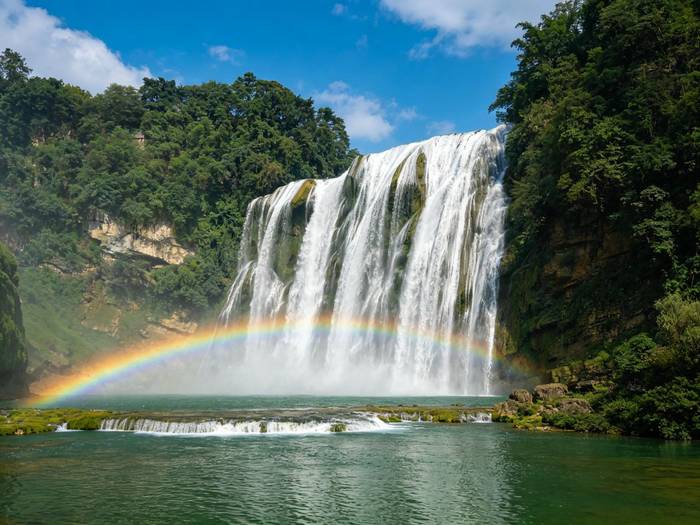
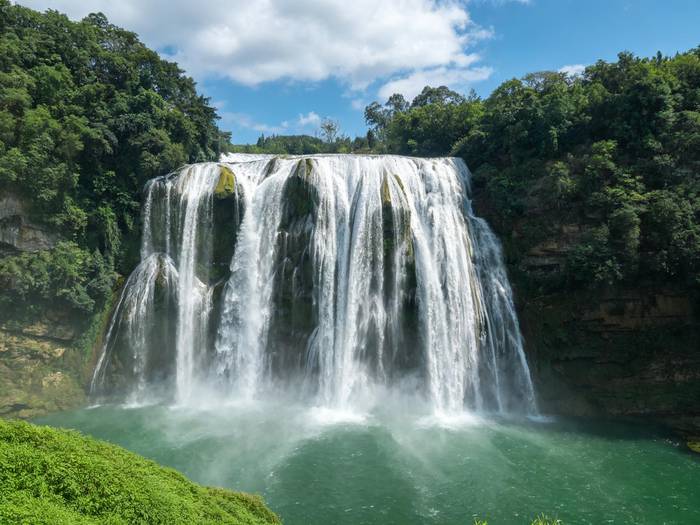
Huangguoshu Grand Waterfall is the reason most people come. It drops 77.8 metres across a front roughly 101 metres wide. A path leads behind the falling water to a wet, echoing corridor that gives the falls a completely different scale. Bring a rain shell and a dry bag for the camera. The corridor — often described as the water-curtain cave — is the single most memorable part of the visit, but it is also the wettest. Expect spray on the lens within seconds and a floor that is slick underfoot. A small-group guide can tell you which moment is least busy so you can step in with the camera ready.
How the zones fit together
The order matters. Doupotang first warms you up and puts the widest fall in the best morning light. Tianxing Bridge second keeps you moving through shaded limestone before the heat of the day. The Grand Waterfall last means the most dramatic sight falls when you are already settled into the rhythm of the park. Your guide may reverse the order on a crowded holiday to stay ahead of the queues; that is a sensible trade, not a mistake in the plan.
An hour-by-hour day from Guiyang
The following is an indicative shape for a small-group day, not a fixed timetable. Your written quote confirms the exact departure point, vehicle and return time, and your guide adjusts the order on the day if weather or crowds require it.
- 06:50 — Departure from central Guiyang. An early start is deliberate: it puts you on the road before the commuter traffic and at the entrance ahead of the largest tour groups. A private vehicle can leave a little later.
- 09:20 — Arrival at the park entrance. This is where passport-linked tickets are checked and the compulsory shuttle is boarded. Allow twenty minutes for the whole group to clear the gate.
- 09:45–10:45 — Doupotang. The broad fall and the riverside platform.
- 11:00–12:30 — Tianxing Bridge. The lower loop, the pools and the natural arch.
- 12:30–13:15 — Lunch. A simple set lunch near the Grand Waterfall zone, or the lunch-on-the-coach option on larger departures.
- 13:15–15:30 — Huangguoshu Grand Waterfall. Viewing platforms, then the path behind the curtain of water.
- 15:30–16:00 — Shuttle back and free time. A chance to buy water or use the facilities before the return leg.
- 16:00–18:30 — Drive to Guiyang. Traffic permitting, you are back in the city in the early evening.
Treat the clock times as a planning aid. In heavy rain, at a public holiday, or when the group includes travellers who need a gentler pace, the day stretches. That is why we recommend an evening flight the following morning rather than the same afternoon.
Tickets, reservations and the official shuttle
Huangguoshu uses real-name ticketing. Foreign visitors should expect to present the same passport used at booking, and the name on the ticket must match it. Carry the physical passport rather than a photograph of it; the gate staff need to read it quickly, and a clear photo on a phone screen is often not accepted at a busy entrance.
Reserve well ahead in peak periods. Summer weekends, the National Day holiday and the Lunar New Year period are the three pressure points, and timed entry slots can be limited. The safest approach is to let your operator secure the reservation and confirm your entry window in the written itinerary. Travellers booking independently should use the official scenic-area channels and check the current rules directly. Ticket prices, entry slots and shuttle arrangements change — verify the current figures and conditions with the official source before travel.
The local payments, explained
Several costs sit outside the main entrance ticket. The internal shuttle is effectively compulsory because the zones are too far apart to walk comfortably. Insurance is a small add-on that is standard on organised tours. An escalator is offered as an optional extra for travellers who want to reduce the climb to the upper viewpoints. We list each of these as a separate line in the quote and state whether it is compulsory or optional. As a working conversion, we quote in Canadian dollars; one Canadian dollar is roughly 5.2 yuan at the time of writing, but the rate moves, so treat any converted figure as indicative and confirm it in your written quote.
A practical point that is often missed: the ticket covers entry to the park, not the optional experiences inside it. If you are comparing two operators, compare the whole package — entrance ticket, shuttle, insurance, guide language, vehicle size and the number of included meals. Those five lines explain almost every apparent price difference.
When is the best time to visit?
The summer months from June to August bring the biggest volume of water and the coolest temperatures — Guizhou is known in China as a summer refuge. The trade-off is crowds, especially on weekends and public holidays. April, May, September and October usually offer a good balance of water flow and manageable visitor numbers.
After heavy rain the falls turn muddy and brown for a day or two. A local guide can check conditions that morning and adjust the order of the zones, which is one practical reason to travel with someone who knows the park. The water clears again quickly once the rain stops, and the spray on the viewing platform is often at its most dramatic in the hour after a storm — provided you have a shell and a waterproof bag.
Winter is drier and quieter. The falls carry less water, but the absence of crowds changes the character of the visit, and the limestone is pleasant in cool air. If your priority is photography rather than raw volume, the shoulder months are usually the better choice. Our guide to the best time to visit Guizhou compares the seasons across the whole province.
How do you get there from Guiyang?
The road takes about 2.5 hours in normal traffic. Independent travelers can hire a car, but most visitors prefer a small-group tour that handles the pickup, the shuttle tickets and the timing. Kanghui Travel, a Guizhou travel service founded in 1997 (license L-GZ-CJ00022), runs a no-shopping day tour with a licensed local guide. Canadian ordinary passport holders may be eligible for visa-free entry for stays of up to 30 days — verify the current policy and your eligibility with the official source before travel.
Prices in CAD are indicative and confirmed in your written quote. You receive that quote within 24 hours, and no payment is required before you approve the itinerary. The quote names the vehicle, the guide language, the hotel pickup point and the local payments, so you can see exactly what you are buying before you commit.
If you are arriving by high-speed rail rather than by air, Guiyang North station is the practical gateway, and a private transfer can collect you there. The drive out to the park is on good roads for most of the way, with the final section through hilly farmland. Motion sickness is uncommon but possible on the winding stretches; our consultants can advise travellers who are sensitive to it.
What does a day tour actually include?
A well-run Huangguoshu day from Guiyang includes the entrance ticket, the coach or small vehicle, a guide, lunch on the coach option and the local shuttle payment disclosed in advance. What it should not include is a detour to a product showroom. When you compare two operators, put the shuttle fee and the guide language side by side; those two items usually explain the whole price difference.
For travelers arriving from Canada, the other practical question is the start time. A 6:50 am coach departure is early but avoids the worst of the queue at the main entrance. An eight-person small group can leave a little later because boarding is quicker. Ask your consultant which option fits your arrival hotel and your body clock. Jet lag is real on a first day in China, and a departure at dawn after a long flight is a poor start; a private transfer the following morning is often the wiser sequencing.
The written itinerary should state where the day ends. Most tours finish at a central Guiyang drop-off in the early evening, which works well if you have a second night in the city. If your flight is the same day, allow a generous buffer — mountain roads do not behave like city traffic. Our overview of small-group tours shows how the waterfall is combined with other sites on multi-day routes.
Before you fly: a Canadian traveller's checklist
A little preparation removes most of the friction from a Guizhou day. These points are expanded in our before-you-go guide, but the essentials are worth stating here.
- Entry documents. Check the current visa-free rules for Canadian ordinary passport holders and verify them with the official source before travel. Make sure your passport has sufficient validity for the whole stay and carry a printed copy of your hotel address.
- Payment. International cards are accepted in many hotels and larger restaurants, but smaller vendors near scenic areas often prefer a mobile wallet. Set up a payment app before you leave home if you intend to use one, and carry a modest amount of cash as a backup. Ask your bank about international transaction fees.
- Connectivity. Decide before departure whether you will use an eSIM, a roaming plan or a local SIM. Test the messaging and map apps you plan to rely on once you arrive, and download offline maps of Guiyang and Anshun.
- Health and comfort. The viewing platforms involve steps and the path behind the falls is wet. Pack a light rain shell, shoes with grip and a dry bag. If you take regular medication, carry it in your hand luggage in the original packaging.
- Language. A licensed guide bridges the gap at the gate and on the trail. Save the Chinese name of the park and your hotel in your phone so a driver can read them aloud.
Common questions
Is the walk to the falls difficult?
The main viewpoints are reached by paved paths with steps. Most visitors in reasonable health manage the route. An escalator is available as an optional extra, and a small-group guide can suggest the gentler version of each zone. Tell your consultant about any knee or mobility concern before booking so the day can be paced accordingly.
Can you visit Huangguoshu and Xiaoqikong in one day?
It is possible only with a very early start and a private vehicle, and neither site gets the time it deserves. Most itineraries give Huangguoshu a full day and pair Xiaoqikong with Xijiang Qianhu Miao Village on the following days. See the Xiaoqikong one-day guide for the reason the two sites are usually separated.
Are meals available inside the park?
Simple set lunches are available near the Grand Waterfall zone. Our day tours include lunch on the coach option and leave the small-group option flexible so travelers can choose what suits their diet. Vegetarian and less spicy dishes can usually be arranged with advance notice — flag this when you request the quote.
Do I need a guide at the entrance?
Not strictly, but the real-name ticket check, the shuttle system and the timing from Guiyang are noticeably easier with someone local. A guide also knows which platform is quiet at which hour, which is information no map will give you.
What happens if it rains all day?
The falls still run, and the spray is part of the experience. Your guide may reorder the zones and skip the water-curtain path if the floor is too slick. Refunds and substitutions for weather are set out in the written itinerary; ask your consultant to explain them before you pay.
Is the waterfall suitable for older travellers?
Yes, with the right pacing. The shuttle removes most of the walking between zones, and each section offers a shorter route. Travellers who prefer to avoid steps can remain on the upper platforms while the rest of the group goes behind the curtain of water. Our senior-friendly route guide covers the wider question of pacing.
Can I combine the waterfall with a city day in Guiyang?
On a five-day or longer itinerary, yes. Jiaxiu Tower and the old city lanes make a relaxed half-day, and the food scene deserves an evening. Keep the waterfall on a separate day; combining them compresses both.
How far ahead should I reserve?
In shoulder season, two weeks is usually enough for a small-group departure. In July, August and around public holidays, reserve as early as your dates allow, because good small-group seats and well-located hotels are the first things to go.
Make it part of a wider trip
Huangguoshu is the western anchor of most Guizhou loops. See our small-group tours for three-, four- and five-day routes that combine the waterfall with Xiaoqikong, Xijiang Qianhu Miao Village and Mount Fanjing, or design a private itinerary around your own dates. A dedicated consultant can also sequence the day around your arrival flight, your hotel and the weather window, so the waterfall lands on the clearest day of your stay. If you would like to understand how the cost is assembled before you request a quote, our six-day cost breakdown explains the four budgets in plain language.