A six-day Guizhou tour has four cost buckets: the land tour, the compulsory local scenic packages, international flights and personal spending. The single most useful thing a traveler can do is ask for those four items separately. A quote that shows only one number is difficult to compare — and difficult to trust. This guide breaks each bucket down and shows how to read a quote honestly, in Canadian dollars and in plain language.
Bucket one: the land tour
This covers the vehicle, the guide, the hotels, the entrance tickets to listed sites and the meals stated in the itinerary. Prices depend on the group size, the hotel category and the season. A small group of six to eight costs more per person than a twenty-person coach, but it buys shorter stops, a better vehicle and far more flexibility. The question is not which costs less, but which delivers the trip you actually want.
At Kanghui Travel, the Canadian-dollar price published on a tour page is a starting figure. The final number is confirmed in a written quote within 24 hours, and no payment is due before you approve it. The quote names the vehicle, the guide language, the hotel category for each night and the meals included. Those four lines let you compare two operators on equal terms rather than on a headline number designed to attract attention.
What changes the land price
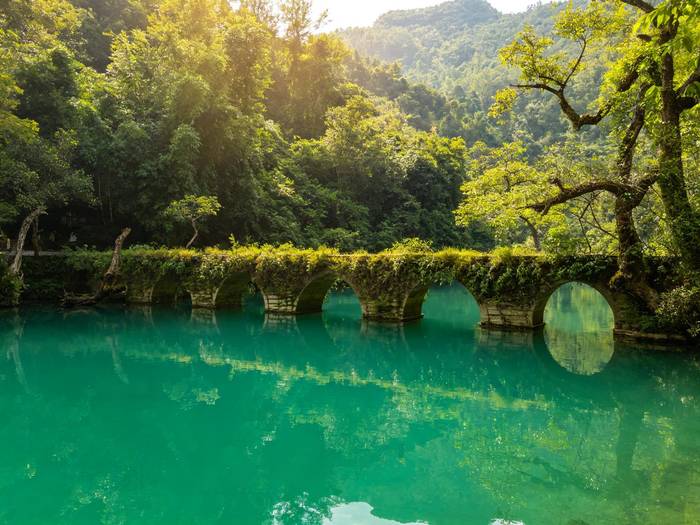
Season is the biggest variable. July and August, the National Day holiday and the Lunar New Year period are the pressure points, when hotels and good small-group seats are scarce. Shoulder seasons such as April, May, September and October usually offer better value and lighter crowds. Group size is the second variable: the fixed cost of a vehicle and guide is shared among fewer travellers in a small group, so the per-person figure rises. Hotel category is the third, and the difference between a standard property in Guiyang and a boutique guesthouse inside Xijiang Qianhu Miao Village is real.
When you read a land price, check what is included at each site. Some operators include only the main entrance ticket and leave the internal shuttle, the cableway and the insurance to be paid locally. That is acceptable if it is stated, but it changes the comparison. Our five-day loop shows how the headline sights fit together, and the same inclusion principles apply whether you travel for five days or six.
Bucket two: local scenic packages
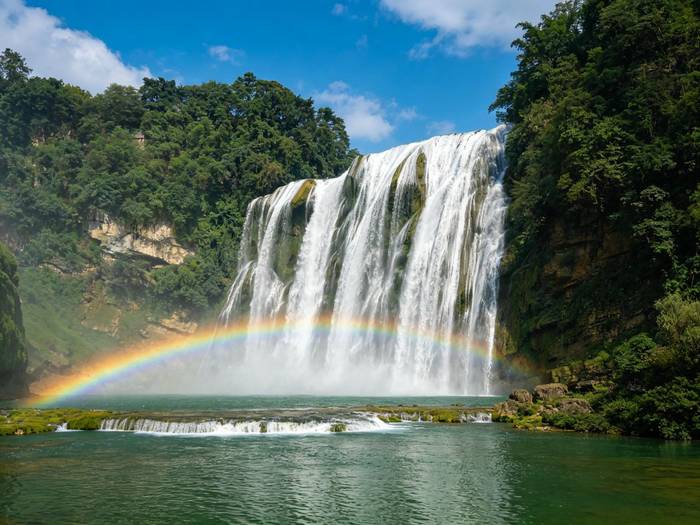
This is where most confusing quotes hide their costs. In Guizhou, several parks require an internal shuttle, cableway or insurance that is paid separately from the entrance ticket. On a six-day route covering Huangguoshu, Xiaoqikong, Xijiang, Mount Fanjing and Zhenyuan, these packages add up to roughly C$65–80 per person — around 350–420 yuan at an indicative rate of one Canadian dollar to 5.2 yuan. That figure is a working guide only: the rate moves and local fees change, so verify the current amounts with the official source before travel.
That is not a hidden fee if it is listed. Every Kanghui Travel quote itemizes the local packages and states whether they are compulsory or optional, so you can compare two operators on equal terms. Expect the Huangguoshu shuttle, the Xiaoqikong shuttle and insurance, the Xijiang internal shuttle, and the Mount Fanjing cableway and shuttle package to appear as separate lines. The Mount Fanjing cableway is the largest single item among them and is part of the standard east-route package. If an operator's quote has no such lines, ask why before you assume the costs are included.
Compulsory versus optional
A compulsory package is one you cannot reasonably avoid: the internal shuttle at Huangguoshu, for example, is the only practical way to move between the zones. An optional extra is a choice: the boat on Yuanyang Lake at Xiaoqikong, an escalator at a viewpoint, or a photography add-on in a Miao village. Both are fine when they are disclosed. What matters is that you can tell them apart before you pay. A vague phrase such as "local fees apply" is not a disclosure; a line that names the fee and marks it compulsory is.
Bucket three: flights
Flights between Canada and China are not included in the land price. Direct capacity remains limited compared with 2019, and many itineraries involve a connection. Booking several months ahead usually helps; September is often more economical than the December holiday period. Your consultant can advise on arrival times that match the group's pickup schedule, which matters more than it sounds when the first day is followed by an early departure.
Two practical points are worth stating. First, a very early arrival after a long flight is a poor start to a mountain itinerary; arriving a day early and resting in Guiyang is often better value than it appears. Second, check the baggage allowance carefully, because connections on separate tickets can carry different rules. Our getting-to-Guizhou guide covers flights, connections and rail in more detail, and the visa guide explains the entry rules for Canadian passports — verify the current policy with the official source before travel.
Bucket four: personal spending
This includes optional boat rides, upgraded meals, shopping and travel insurance. Budget for a buffer rather than a precise figure. Travelers who want predictable totals often choose an itinerary with more meals included and fewer optional activities. Many travelers in the 55+ group prefer this approach, and it is a reasonable choice for anyone who dislikes surprises.
A sensible buffer covers the optional experiences you are likely to accept, a few meals beyond the itinerary, and small purchases at scenic-area shops. Mobile wallets are widely used in China, so set one up before departure if you intend to use one, and carry a backup card and a little cash. Ask your bank about international transaction fees, because they can add a noticeable amount over a week of card payments. Our payments guide explains the options in detail.
Travel insurance is worth treating as a separate decision rather than part of the tour budget. Kanghui Travel's land price includes travel agency liability and accident insurance, but that is not a substitute for your own medical and evacuation cover. Arrange that before you fly.
How to compare two quotes fairly
Ask three questions: What is included in the entrance tickets? Are the scenic shuttles listed as separate payments? Are the hotels named by category? A lower headline price that omits two of those three items is not actually more economical. Write the answers down side by side, and the comparison becomes obvious. A quote that resists these questions is telling you something.
Kanghui Travel has been arranging Guizhou travel since 1997 under license L-GZ-CJ00022. Prices in CAD are indicative and confirmed in your written quote; we do not promise a fixed exchange rate. Canadian ordinary passport holders may be eligible for visa-free entry for stays of up to 30 days — verify the current policy and your eligibility with the official source before travel.
Three quote lines worth comparing
Ask every operator for the same three lines: the land price, the local scenic packages and the hotel category by night. When those are written down, comparisons become straightforward. A lower land price that excludes three shuttles and a cableway is not better value, and a "four-star" hotel in a small county town is not the same product as a four-star property in Guiyang. Ask for the property names or at least the exact category for each night.
Ask also what happens if a site closes because of weather. A good operator will say plainly that the day is reordered and the entry fee is either used on another date or refunded. A vague answer here usually predicts a difficult day on the road. This is especially relevant for Mount Fanjing, where high wind can close the summit, and for any waterfall day after heavy rain.
For travelers paying in Canadian dollars, the final question is the exchange-rate basis. Kanghui Travel states that CAD prices are indicative and confirmed in the written quote, and does not promise a fixed rate. That is an honest formulation: a quote is valid for a period, not forever. Ask how long yours remains open, and get the validity date in writing. If you are comparing a quote from last month with one from today, part of the difference may simply be the rate.
A worked example of reading a quote
Imagine two six-day offers. The first shows a low land price but no mention of shuttles, names no hotels and lists dinners as "at your own arrangement." The second is higher, itemises the Huangguoshu and Xiaoqikong shuttles, names each hotel by category and includes four dinners. On paper the first looks better. In practice the second is likely to cost less by the end of the week and to deliver more predictable days. This is not a trick; it is simply the difference between a price and a specification. Ask for the specification every time.
A six-day budget in practice
Numbers help, but only if the basis is clear. The figures below are indicative and expressed in Canadian dollars, using a working conversion of one Canadian dollar to roughly 5.2 yuan. That rate moves, and every amount should be confirmed in your written quote; verify the current local fees with the official source before travel. The purpose of this section is not to quote a tour price but to show how the four buckets relate to one another.
The land tour is the largest single bucket and the one that varies most with group size and hotel category. Local scenic packages are comparatively small but easy to underestimate if they are not itemised. International flights are a separate decision, booked independently of the land tour and influenced by season and connection choices. Personal spending is the bucket you control day to day, and a sensible buffer is more useful than a precise forecast.
Where travellers commonly overspend
The first is optional activities accepted on impulse. A boat ride here, a photography add-on there, and an upgraded meal can add up over six days. None is wrong, but they should be chosen rather than accumulated. The second is last-minute booking of in-village accommodation at Xijiang, where limited rooms and high demand can push the price up sharply. The third is exchanging money at the airport without checking the rate; a mobile wallet or a card with reasonable foreign-transaction terms is usually better. The connectivity guide and the payments guide cover the practical tools that keep these costs predictable.
Where it is false economy to save
Saving on the guide language can be a mistake if interpretation matters to you: a Mandarin-only driver will get you to the gate but will not explain the karst geology or the history of a Miao long-table meal. Saving on the Xijiang overnight removes the single best moment of many trips. And saving on travel insurance is rarely wise given the distance from Canada. These are not arguments for the most expensive option; they are reminders that a headline price is not the whole story. Our group-size comparison explains how to get better value without losing the parts that make the trip worth taking.
Before you fly: a Canadian traveller's checklist
- Entry documents. Verify the current visa-free rules for Canadian ordinary passport holders with the official source before travel, and carry the passport used at booking.
- Payment. Set up a mobile wallet before departure if you plan to use one, carry a backup card and a little cash, and ask your bank about international transaction fees.
- Connectivity. Arrange an eSIM or roaming plan in advance and download offline maps of the cities and counties on your route.
- Packing. Layers, a rain shell, shoes with grip and any regular medication in hand luggage. Six days covers forest, mountain and riverbank.
- Insurance. Buy your own medical and evacuation cover before departure, in addition to the agency insurance included in the land price.
The full checklist is in our before-you-go guide.
Common questions
Can I pay in Canadian dollars?
Quotes are issued in CAD. Payment methods and any card fees are explained in the written quote before you commit. Many travelers carry a backup card and a small amount of cash for local purchases. The exchange rate is not fixed, so ask how long the quote stays open.
Are there mandatory shopping stops?
Not on our pure-sightseeing departures. If an itinerary includes scheduled cultural or product visits, that is stated openly in the daily plan rather than left out of the description.
Is insurance included?
Travel agency liability and accident insurance are included in the land price. We recommend adding your own medical and evacuation coverage before departure.
Why do local packages cost extra?
The parks set their own shuttle, cableway and insurance fees, separate from the entrance ticket. Listing them separately makes the comparison honest. Verify the current amounts with the official source before travel.
How far ahead should I book?
For shoulder season, two weeks is usually enough for a small group. For July, August and public holidays, book as early as your dates allow. International flights should be arranged several months ahead where possible.
Plan your budget
See six-day itineraries with itemized inclusions, or request a written quote tailored to your dates and group size. A dedicated consultant will answer the three comparison questions in writing, and no payment is required before you approve the itinerary.