Zhijin Cave is a full day from Guiyang and roughly three and a half hours underground. A UNESCO geopark and national natural heritage site, it is often described as China's finest show cave — a claim that makes more sense once you are standing under its tallest formations. The drive is about two hours each way. This guide covers what you will see inside, how to plan the day, and why a good guide changes a walk through lit chambers into something you can actually explain afterwards.
What will you see inside?
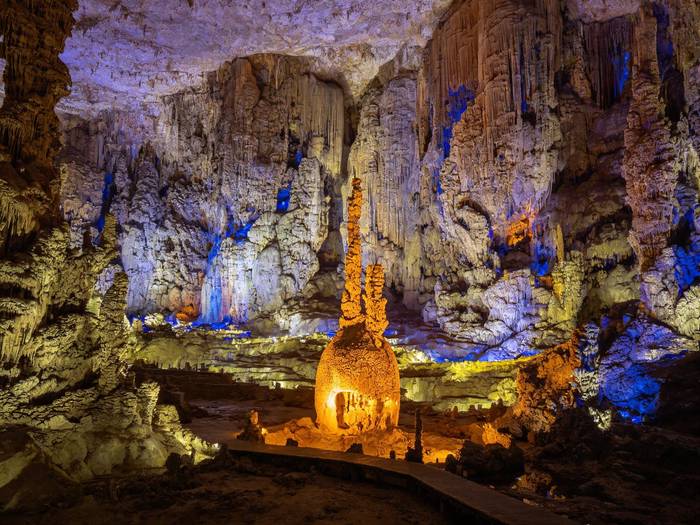
The cave is a sequence of enormous chambers filled with stalactites, stalagmites and columns. The Underground Tower Forest is the signature section: dozens of tall stone pillars that read like a city seen from above. It is the image most visitors take away, and it is hard to photograph well, because the scale is difficult to convey without a person in the frame. Allow time to stand still and let your eyes adjust; the lit path moves quickly and the best formations reward a slower look.
The Silver Rain Tree is a delicate white formation that looks like frozen water falling from the ceiling. Nearby, the Nantian Gate chamber gives a sense of the scale — the roof disappears into darkness above the lit path. Between these set-piece chambers, the route passes through narrower passages where the formations are smaller but more intricate. It is a mistake to treat the walk as a rush between the famous sights; much of the pleasure lies in the changing shapes and the way the light picks out the calcite.
Bring a layer. The cave stays cool and damp year-round, which is welcome in summer and noticeable in winter. The air is still and the temperature is constant, so a light jacket is enough even on the hottest Guiyang afternoon.
How the formations formed
A guide can explain that the cave is a limestone landscape carved by water over an immense timescale. Rain picks up carbon dioxide as it passes through soil, forms a weak acid, and slowly dissolves the rock. Where water drips from the ceiling, calcite is deposited, building a stalactite downward; where it lands on the floor, a stalagmite rises. Over centuries the two can meet and join into a column. The different rates of growth explain why some pillars are slender and others massive. Ask your guide about the age of the Silver Rain Tree and why the columns in the Tower Forest differ in width — these are the questions that make the visit stick, and they turn a row of lit rocks into a story about water, time and stone.
How should you plan the day?
Tours leave Guiyang around 7:00 am and return by about 4:30 pm. That allows roughly 3.5 hours inside, a set lunch and the two-hour drives. The internal shuttle and insurance are a small compulsory local payment, listed in the written quote. Ticket prices and shuttle arrangements change between seasons, so verify the current figures with the official source before travel.
The walk is mostly on paved steps and lit platforms. There are slopes and a fair number of stairs, but nothing technical. Visitors with limited mobility should speak with the consultant before booking so the pace can be planned. The route is one-way through the cave and back out by a return path, so there is no chance of getting lost; the main consideration is the number of steps rather than the distance.
An indicative day timeline
- 07:00 — Depart Guiyang. A two-hour drive through the countryside, with a comfort stop on the way.
- 09:00 — Arrive at the cave entrance. Ticket check, passport validation and the compulsory internal shuttle.
- 09:20–12:50 — Inside the cave. The lit route through the chambers, at a steady guide-led pace.
- 13:00–13:45 — Lunch. A simple set lunch near the site.
- 14:00–16:00 — Return drive to Guiyang. Traffic permitting, you are back in the city in the afternoon.
The cave interior is cool and the exit is bright, so eyes need a moment to adjust when you come out. Plan a short pause before the drive back rather than a hurried departure.
Tickets, reservations and local payments
Entry uses real-name ticketing. Carry the passport used at booking, because the name on the ticket must match the document at the gate. In peak periods the site can be busy, and timed entry slots may be limited; your operator can secure the reservation and state it in your written itinerary. Travellers booking independently should use the official channels and check the current rules directly. All ticket prices, opening hours and shuttle arrangements should be verified with the official source before travel.
The internal shuttle and insurance are treated as a compulsory local package and appear as a separate line in every Kanghui Travel quote. We quote in Canadian dollars; as a working guide, one Canadian dollar is roughly 5.2 yuan, though the rate moves, so treat any converted figure as indicative until it is confirmed in writing. If you compare operators, line up the entrance ticket, the local package, the guide language and the number of included meals — those four items explain most of the difference.
Why visit with a local guide?
The lighting in a show cave is designed for drama, not interpretation. A licensed guide explains how the formations grew, how long they took and why the site matters geologically. That turns a visual experience into something you can actually describe afterwards. Without that context, an hour underground can blur into a sequence of bright chambers; with it, you leave with a handful of names and ideas that make the memory durable.
Kanghui Travel has run Guizhou itineraries since 1997 under license L-GZ-CJ00022. This day tour is pure sightseeing with no shopping stops, and the price quoted in CAD is confirmed in writing within 24 hours. Canadian ordinary passport holders may be eligible for visa-free entry for stays of up to 30 days — verify the current policy and your eligibility with the official source before travel. No payment is required before you approve the itinerary.
Can you combine it with anything else?
Zhijin Cave works best as a standalone day from Guiyang. Travelers with a second day can pair it with Qingyan Ancient Town or an extra night in the city. It also fits naturally before the western loop to Huangguoshu Waterfall. Because the cave is unaffected by rain, it is a useful substitute when a wet day threatens an outdoor sight; a local operator can often reorder the itinerary at short notice.
Travellers who have seen several show caves may want to weigh the two-hour drive each way before committing. Travellers seeing their first major cave usually find it unforgettable. If your itinerary is tight, the five-day loop offers the classic headline sights; the cave is better treated as an addition on a sixth or seventh day. Our seven-day itinerary shows one way to fit it in.
Comparing caves with the rest of Guizhou
Zhijin Cave fills a different niche from the province's waterfalls and villages. It is a reliable choice when the weather is poor, it involves no long outdoor walk, and the temperature stays constant through the year. Travelers who have already seen one or two show caves may want to weigh the two-hour drive each way before committing; travelers seeing their first major cave usually find it unforgettable.
The internal route is lit and signed. A guide adds the interpretation that turns a row of formations into a story about water, time and limestone. Ask about the age of the Silver Rain Tree and the reason the columns grow at different rates — these are the questions that make the visit stick. Visitors interested in geology often find the cave more rewarding than they expected, because the scale of the chambers gives a physical sense of the timescales involved.
Cave air is damp and cool even in July. A light layer in your day pack is enough. There is no need for specialist equipment on the standard visitor route, and the walk is manageable for most travelers who can handle an hour of steps. A dry bag for the camera is useful where the walls are damp, and shoes with grip are sensible on the polished stone steps.
Who will enjoy this day most?
The cave suits a wide range of travellers because the walking is steady rather than demanding and the temperature is comfortable all year. Families with children often find the scale of the chambers genuinely exciting, and the constant cool air is a welcome change from a hot Guiyang afternoon. Travellers in their 60s and 70s usually manage the route well, provided they are comfortable with an hour or so of steps; a guide can set a gentle pace and there is no pressure to hurry through the chambers.
It is a weaker choice for anyone who dislikes enclosed spaces or who has limited mobility and finds stairs difficult, since the route is underground and the steps are continuous. For those travellers, an outdoor day in Guiyang or a gentler river-town visit may be more rewarding. If you are unsure, describe your mobility honestly to your consultant before booking. The written itinerary should state the approximate number of steps and the duration of the walk, so you can make an informed decision rather than discovering the pace on the day. A private departure can always shorten the visit without shortening the rest of the trip.
Before you fly: a Canadian traveller's checklist
- Entry documents. Verify the current visa-free rules for Canadian ordinary passport holders with the official source before travel, and carry the passport used at booking.
- Payment. Set up a mobile wallet before departure if you plan to use one, and carry a backup card and a little cash. Ask your bank about international transaction fees.
- Connectivity. Arrange an eSIM or roaming plan in advance and download an offline map of Guiyang and Zhijin. Save the Chinese name of your hotel in your phone.
- Packing. A light layer, shoes with grip and a dry bag for the camera are enough for the cave. The drive is in daylight both ways.
- Language. A licensed guide interprets the geology and handles the ticket check. Our language guide covers the wider picture.
The full checklist is in our before-you-go guide.
Common questions
Is photography allowed?
Yes in most sections, though flash is discouraged where it washes out formations. A tripod is not useful on the standard group walk. A phone with a good low-light mode works well, and a guide can point out the chambers where the lighting is most even.
Is it suitable for children?
Yes. The lit path and the scale of the chambers tend to be a hit with younger travelers. Keep close on the steps and carry an extra layer. The constant cool temperature is a welcome break from a hot Guiyang afternoon.
What about lunch?
A simple set lunch of eight dishes and soup is included on our day tour. Let your consultant know about allergies or dietary needs in advance, and the kitchen can usually adapt the meal.
How many steps are involved?
The route uses paved steps and lit platforms with a fair number of short flights. It is not technical, but it is a steady walk of three and a half hours. Travellers who are sensitive to stairs should discuss the pace before booking.
Is it a good choice in the rainy season?
Yes — it is one of the best wet-weather options in the province, because the visit is entirely indoors. Pair it with an outdoor sight on the following day rather than trying to combine them in one.
Can I visit independently?
You can reach the site on your own, but the ticket check, the compulsory shuttle and the timing from Guiyang are simpler with a guide. A written quote lists every local payment up front.
Plan your visit
Browse day tours from Guiyang or design a private itinerary that includes Zhijin Cave. Our before-you-go guide covers packing for caves and changing weather. A dedicated consultant will send a written quote in Canadian dollars within 24 hours, and no payment is required before you approve the itinerary.